A practical, operator-led breakdown of the Health Canada licensing process
If you are searching for how to obtain a micro-cultivation licence in Canada, you are likely already aware of one thing: this is not a simple administrative process.
Many projects assume that cannabis licensing with Health Canada is primarily about paperwork. In reality, regulators assess operational capability, not intent. A well-written application that does not reflect a structurally viable operation will eventually collapse — either during review, inspection, or early-stage production.
This guide explains:
- What a micro-cultivation licence actually allows
- The step-by-step Health Canada licensing process
- The real regulatory expectations behind GPP compliance
- The most common reasons applications fail
- How to reduce regulatory and operational risk
This article is written from an operator-led compliance perspective, not a theoretical one.
What Is a Micro-Cultivation Licence in Canada?
A micro-cultivation licence under the Cannabis Act allows the holder to cultivate cannabis within a limited canopy size (800 m² of flowering space).
It is designed for:
- Smaller-scale producers
- Craft operators
- Entry-level regulated businesses
- Agricultural-based cannabis facilities
However, the term “micro” does not mean reduced regulatory expectations.
Health Canada applies the same Good Production Practices (GPP) standards to micro-cultivation licence holders as it does to larger standard licence holders. The difference lies in scale — not compliance obligations.
Step 1: Understand What Health Canada Actually Evaluates
Before discussing the formal licensing steps, it is important to understand how Health Canada evaluates applications.
Regulators assess:
- Physical site control
- Security infrastructure
- SOP architecture
- Record-keeping systems
- Operational coherence
- Inspection readiness
They do not approve ideas. They approve structured, compliant systems.
If your project cannot withstand an inspection, it is not ready for submission.
Step 2: Secure Site Control
Before applying for a micro-cultivation licence, you must demonstrate control over the proposed site.
This includes:
- Ownership or a valid lease
- Zoning compliance
- Municipal authorization
- Secure facility layout
Common mistake:
Applicants secure land but fail to confirm municipal alignment early. Delays at the municipal level often stall otherwise viable cannabis licensing applications.
Step 3: Facility Design & Regulatory Layout
Facility design is not architectural aesthetics — it is regulatory logic.
A compliant micro-cultivation facility must include:
- Clearly defined cultivation areas
- Controlled access points
- Secure storage
- Surveillance coverage
- Sanitation zones
- Record-keeping stations
Your floor plan must align with:
- Your SOPs
- Your security narrative
- Your operational model
Health Canada frequently identifies inconsistencies between:
- Floor plans
- Written procedures
- Security descriptions
These inconsistencies slow down the review process and increase inspection risk.
Step 4: Develop Compliant SOPs (Standard Operating Procedures)
SOP development is one of the most critical components of cannabis licensing in Canada.
SOPs must cover:
- Cultivation procedures
- Sanitation protocols
- Pest management
- Harvesting
- Waste destruction
- Record keeping
- Complaint handling
- Recall procedures
- Quality assurance oversight
Most micro-cultivation applications fail not because SOPs are missing, but because they are:
- Generic
- Copied from templates
- Operationally unrealistic
- Not aligned with facility flow
Health Canada expects SOPs to reflect actual operational capability — not theoretical best practices.
If your team cannot realistically execute what is written, the system will fail under inspection.
Step 5: Security Requirements
Security requirements under a micro-cultivation licence include:
- Secure storage areas
- Controlled access
While micro licences have fewer physical security requirements than standard licences, they are still strictly regulated. Security must be integrated into operational flow, not added as an afterthought.
Step 6: CTLS Submission (Cannabis Tracking and Licensing System)
All applications are submitted through the CTLS portal.
The application includes:
- Corporate structure information
- Key personnel details
- Security clearance applications
- Facility evidence package
- SOP documentation
Health Canada does not review submissions emotionally. They evaluate structural completeness and internal consistency.
Incomplete or incoherent submissions significantly extend timelines.
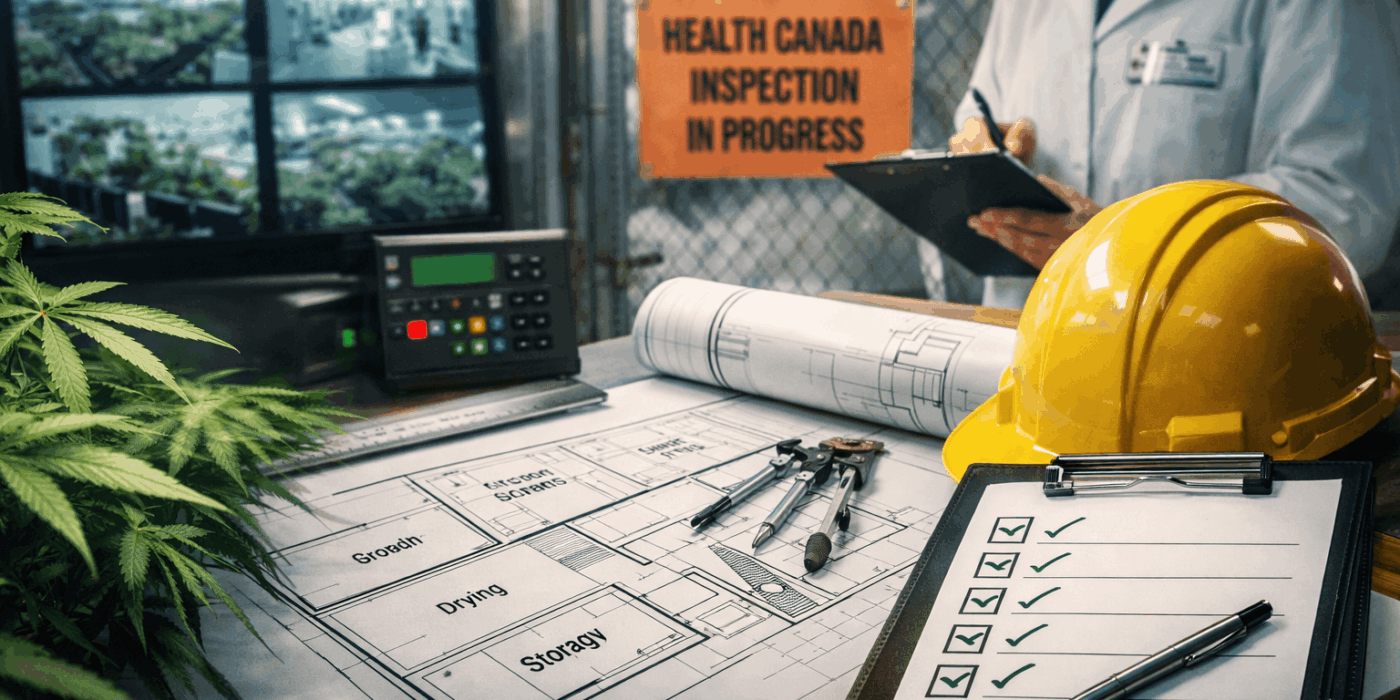
Step 7: Inspection Readiness
Receiving a “ready for inspection” notification is not the finish line.
This is where many micro-cultivation projects experience delays.
Inspectors assess:
- Whether the facility matches submitted floor plans
- Whether SOPs reflect actual operations
- Whether staff understand procedures
- Whether record-keeping systems are functional
Inspection readiness requires:
- Staff training
- Documentation accessibility
- Clear process ownership
- Operational rehearsal
You cannot improvise compliance on inspection day.
Most Common Reasons Micro-Cultivation Applications Fail
From field experience, the most common issues include:
1. Misalignment Between Documents and Operations
Floor plans, SOPs, and security narratives contradict each other.
2. Overcomplicated SOP Systems
Applicants attempt to mimic pharmaceutical GMP systems unnecessarily.
3. Lack of Operational Realism
Procedures that cannot be sustained by a small team.
4. Incomplete Record-Keeping Framework
Health Canada expects traceability and documentation discipline from day one.
5. Underestimated Timeline
Applicants expect approval within months when realistic timelines often extend longer depending on readiness and regulator workload.
Micro-Cultivation vs Standard Licence: Strategic Considerations
Choosing a micro-cultivation licence can be advantageous for:
- Lower capital requirements
- Focused production models
- Craft positioning
- Vertical integration later
However, scaling beyond 800 m² of production area requires licence transition.
Regulatory strategy should align with your long-term operational plan — not short-term convenience.
How to Reduce Regulatory Risk
If you are preparing a micro-cultivation licence in Canada, consider these principles:
1. Design for Inspection
Build systems that can be defended verbally and operationally.
2. Align SOPs With Real Capacity
Do not over-engineer beyond your team’s ability to maintain.
3. Think Beyond Approval
Licensing is the beginning. Ongoing compliance determines long-term viability.
4. Conduct a Pre-Submission Gap Review
A structured regulatory review before submission reduces costly revisions.
Timeline Expectations for 2026
Cannabis licensing timelines in Canada vary depending on:
- Application quality
- Completeness
- Security clearance processing
- Regulator backlog
While some applications move efficiently, others face delays if structural inconsistencies are identified. A properly built application will be typically approved within 90-120 days while a bad application can take years.
Planning for a conservative timeline reduces financial stress and operational risk.
Final Thoughts: Licensing Is Structural, Not Administrative
Obtaining a micro-cultivation licence in Canada is not about submitting a polished application.
It is about building a regulatory system capable of surviving:
- Health Canada inspections
- Operational pressure
- Team turnover
- Market fluctuations
Projects that treat compliance as an operational capability succeed long term.
Projects that treat licensing as paperwork struggle after approval.
Preparing a Micro-Cultivation Licence in Canada?
If you are developing a cannabis project and want to assess regulatory readiness before submission, consider a structured regulatory strategy call.
A properly designed system reduces delays, protects capital, and increases long-term stability.
👉 Book a Strategy Call to evaluate your project’s regulatory viability.